Charitable bequests by Mary Chilton Winslow and other Mayflower Pilgrims (1620-1679): Caleb Johnson’s Mayflower History.com, wills of Mayflower passengers at http://mayflowerhistory.com/probate-records
Rev. Thomas Bargrave bequest (1621): “Henrico and Its College” by Robert Hunt, The William and Mary Quarterly, Oct. 1938, Vol. 18, No. 4, pages 453- 498.
“John Harvard: Brief life of a Puritan philanthropist: 1607-1638” by Conrad Edick Wright in Harvard Magazine at https://www.harvardmagazine.com/2000/01/john-harvard.html.
Harvard College gifts of cash, bequests, annuities, land, buildings, and equipment (1636-1712): Margery Somers Foster, “Out of Smalle Beginings…”: An Economic History of Harvard College in the Puritan Period (Cambridge, MA: Belknap Press, 1962), pages 106-122.
Charitable bequests in the wills of George Washington (1799) and James Madison (1836): Wills of the U.S. Presidents, Herbert R. Collins and David B. Weaver (New York: Communications Channels Inc., 1976), pages 15-31 and 42-48.
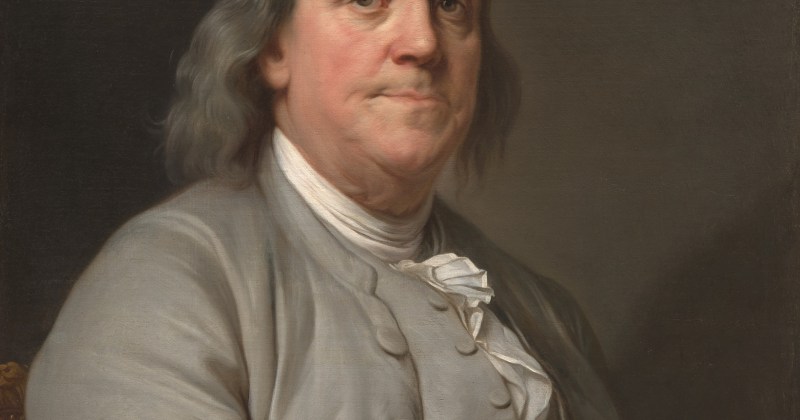
Benjamin Franklin’s testamentary charitable trusts: “The Codicil of the Will of Benjamin Franklin (1789),” Dwight F. Burlingame, ed., Philanthropy in America: A Comprehensive Historical Encyclopedia (Santa Barbara, CA: ABC-CLIO Inc, 2004), pages 589-591. Also “From Ben Franklin, a Gift That’s Worth Two Fights” by Fox Butterfield, New York Times, April 21, 1990.
James Logan’s testamentary charitable trusts (1751): https://librarycompany.org/2017/06/09/treasures-from-the-library-company-of-philadelphia-4/
Charitable trusts managed by the City of Philadelphia: http://www.citytrusts.com/
Statute of Charitable Uses (1601): David C. Hammack, Making the Nonprofit Sector in the United States: A Reader (Bloomington & Indianapolis: Indiana University Press, 1998), pages 3-8. The best history of charitable trusts is the wide-ranging collection of essays entitled Itinera Fiduciae: Trust and Treuhand in Historical Perspective, ed. by Richard Helmholz and Reinhard Zimmermann (Berlin: Duncker & Humblot, 1998). See also the extensively-documented essay “The 1000-Year History of Charitable Trusts” by Ronald Brown at https://giftplanninghistory.org/2019/09/01/the-1000-year-history-of-charitable-trusts/
U.S. Supreme Court decisions on charitable trusts: Trustees of Philadelphia Baptist Association v. Hart’s Executors (1819) and Vidal v. Girard’s Executors (1844). See George G. Bogert et al, Cases and Text on the Law of Trusts, 6th ed. (Westbury, NY: The Foundation Press, Inc., 1991), Chapter 10: “Charitable Trusts,” pages 200-238. Also Girard Will Case: Arguments of the Defendants’ Counsel and Judgment of the Supreme Court … To Which is Added the Will of Stephen Girard (Philadelphia: J. Crissy, Printer, 1844) and https://philadelphiaencyclopedia.org/archive/girard-college/
John Trumbull’s gift annuity with Yale College: see A History of Charitable Gift Planning by Ronald Brown (Amazon: 2017), pages 13-81.
Peter Augustus Jay and professional collaboration: see A History of Charitable Gift Planning by Ronald Brown (Amazon: 2017), pages 26-29 and 48-72.
Luther Bradish’s report “On the Matter of Accepting Trusts” (1848): full text published in A History of Charitable Gift Planning by Ronald Brown (Amazon: 2017), pages 317-324.
Alfred Williams Anthony and the Committee on Financial and Fiduciary Matters: Linking Christian Education with Financial Agencies: What Has Been Done and What It Means, a Report for 1926 (New York: FCCCA, 1927). Cooperation in Fiduciary Service: Papers Presented at a Conference on Financial and Fiduciary Matters (New York: Abbott Press & Mortimer-Walling, 1927; Wise Public Giving Series, no. 14).
Gift annuity campaign of the American Bible Society (1919-1930): A History of Charitable Gift Planning by Ronald Brown (Amazon: 2017), pages 110-121.
Planned giving advertising campaign by the Bank of New York and Trust Company and other firms (1926): Alfred Williams Anthony, Linking Christian Education with Financial Agencies: What Has Been Done and What It Means, a Report for 1926 (New York: FCCCA, 1927), A History of Charitable Gift Planning by Ronald Brown (Amazon: 2017), pages 180-181. Also the webinar “The History of ACGA is the History of Gift Planning in America” by Ron Brown, ACGA Conference 2020.
First Conference on Gift Annuities, and founding of the American Council on Gift Annuities (1927): Annuity Agreements of Charitable Organizations: Papers, Findings and Conclusions of a Conference on Annuities (New York: Abbott Press and Mortimer-Walling, 1927; Wise Public Giving Series, no. 18) and A History of Charitable Gift Planning by Ronald Brown (Amazon: 2017), pages 169-228.
George Augustus Huggins and the actuarial revolution in American philanthropy: “Actuarial Basis of Rates,” Annuity Agreements of Charitable Organizations: Papers, Findings and Conclusions of a Conference on Annuities (New York: Abbott Press and Mortimer-Walling, 1927; Wise Public Giving Series, no. 18) and A History of Charitable Gift Planning by Ronald Brown (Amazon: 2017), pages 169-228.
Cornell University gift planning (1924-1934): Harold Flack, “The Cornell University Bequest Program,” Philanthropy for the Future: A Long-Range Look at Economic Policies in the Field of Charity, ed. Alfred Williams Anthony (New York: Committee on Financial and Fiduciary Matters, 1931), Wise Public Giving Series No. 36, pages 96-101.
Joint Conference of Colleges, Trust Institutions, Life Insurance and the Bar sponsored by the Association of American Colleges (1934): Bulletin of the Association of American Colleges, Vol. XX (May 1934), No. 2.
Stanford University R-Plan Manual for donors and professional advisors (1937)
Pomona College’s life-income gift plans (1944-1960): Norman S. Fink and Howard C. Metzler, The Costs and Benefits of Deferred Giving (New York: Columbia University Press, 1982), and “Pomona College Leads a Post-WWII Boom in Planned Giving,” Ronald Brown at https://giftplanninghistory.org/2019/09/01/pomona-college-leads-a-post-wwii-boom-in-planned-giving/
For a snapshot of the state of charitable gift planning in the 1940s see Jacob Kay Lasser, How Tax Laws Make Giving to Charity Easy (New York: Fund & Wagnalls Company, 1948. Sidney Prerau succeeded Lasser as head of the J.K. Lasser Tax Institute, now published by Wiley.
Conference on Wills, Annuities, and Special Gifts, conference report by the National Council of Churches of Christ in the United States of America (December 15-16, 1952).
Charitable trust and private foundation abuses and investigations (1950-1968) and the Tax Reform Act of 1969: General Explanation Of The Tax Reform Act Of 1969, (H.R. 13270, 91st Congress, Public Law 91-172), Staff of the Joint Committee on Taxation at .https://www.jct.gov/publications.html?func=startdown&id=2406. Also see “A Landmark in Charitable Gift Planning: 50th Anniversary of 1969 Tax Reform Act,” Ronald Brown at https://giftplanninghistory.org/2019/09/01/comprehensive-policies-on-charitable-gift-planning-in-america-the-tax-reform-act-of-1969/
Tax Reform Act of 1986 (P.L. 99-514, 100 Stat. 2085): crises over charitable remainder trusts as tax shelters, and “finder’s fees.” See https://www.congress.gov/bill/99th-congress/house-bill/3838 and “Getting to ‘Yes’ on Tax Reform: What Lessons can Congress Learn from the Tax Reform Act of 1986?,” a hearing before the Senate Finance Committee on February 10, 2015 at https://www.finance.senate.gov/imo/media/doc/98328.pdf Also see “The Tax Reform Act of 1986 Re-Opens the Window for Abuses,” Ronald Brown at https://giftplanninghistory.org/2019/09/01/the-tax-reform-act-of-1986-re-opens-the-window-for-abuses/
National Committee on Planned Giving founding (1988) and early accomplishments, including ethical guidelines for planned gifts: the CANARAS Convention (1989) and Code (1990), and the Model Standards of Practice for the Charitable Gift Planner (1991). See “A Fledgling National Association Earns its Wings,” Ronald Brown at https://giftplanninghistory.org/2019/09/24/the-first-ethical-standards-for-gift-planners/
Lawsuits seeking triple damages resolved by Charitable Accord, the Philanthropy Protection Act (1995) and Charitable Donation Antitrust Immunity Act (1997): Joseph O. Bull, “Forgotten, But Not Gone: The Philanthropy Protection Act of 1995,” presented at the ACGA Conference in 2014. Also the webinar “The History of ACGA is the History of Gift Planning in America” by Ron Brown, ACGA Conference 2020.
James Baldwin on American history: “10 James Baldwin Books to Read Today” at https://www.oprahmag.com/entertainment/books/a26012817/best-james-baldwin-books/ and Begin Again: James Baldwin’s America and Its Urgent Lessons for Our Own by Eddie Glaude, Jr. (New York: Penguin Random House, 2020). Also the film documentary I Am Not Your Negro (2016) directed by Raoul Peck.
For a much longer bibliography see my website at https://wp.me/Pb878a-a3.
More about America is a Given Place:
Brief preview clip: https://wp.me/pb878a-fH
Practical benefits from watching: https://wp.me/pb878a-gH
Praise for the webinar: https://wp.me/pb878a-fs
Support by the National Association of Charitable Gift Planners: https://wp.me/pb878a-gw
Ron Brown’s speaker bio and promotional piece for your website: https://wp.me/pb878a-gV
Summary outline of webinar topics: https://wp.me/pb878a-gf




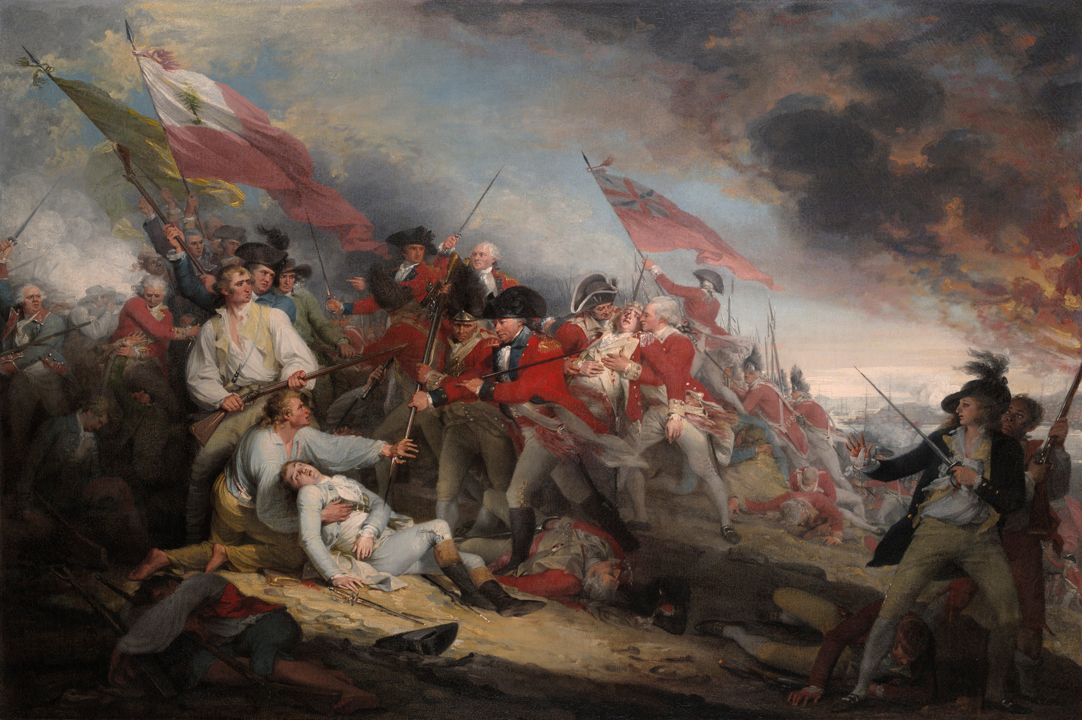 Attend the ACGA Conference in Atlanta on April 20-22 to understand the historical foundations of charitable gift planning:
 Gift Planning History
You must be logged in to post a comment.